Safe Travel for All Community Engagement Identity
- Client
- Chicago Metropolitan Agency for Planning
Daylight
- Community
- Civic
- Government
- Design
- Civic
- Innovation
- Credits
-
Nick Adam
Design Direction, Strategy, Design, NamingKevin Moreland
Design, AnimationDaylight
Engagement Strategy, Capacity BuildingKathleen Hinkel
Photography
A region at a crossroads
Between 2019 and 2022, traffic fatalities in northeastern Illinois rose 29%. The risk wasn't distributed evenly — low-income and Black communities bore a disproportionate share. The problem wasn't a lack of data. It was a lack of participation. Traffic safety planning has long been a technical, quantitative discipline. Crash reports. Engineering standards. Infrastructure budgets. Those tools are necessary, but they can't capture where a parent avoids crossing with her kids, or which intersection a cyclist stops trusting after dark. Lived experience fills gaps that data alone can't reach. Safe Travel for All was designed to close that gap.
A first of its kind
The initiative brought Chicago Metropolitan Agency for Planning (CMAP) and the Illinois Department of Transportation together with county-level traffic safety planning teams across six counties in northeastern Illinois. The goal: use community input to drive real safety action plans. Daylight led the regional equitable engagement strategy. They brought Span in to build the visual brand identity.
The brief had a genuine tension inside it. An identity that read as a government program would satisfy institutions and lose residents. One that felt too approachable would lose authority with state and county partners. The system had to hold both without softening either.
Naming it
Span started with the name. "Safe Travel for All" is direct, active, and built around what people care about — not planning terminology. It gives a complex, multi-agency initiative a single claim that anyone can stand behind, without translation.
The language of the road
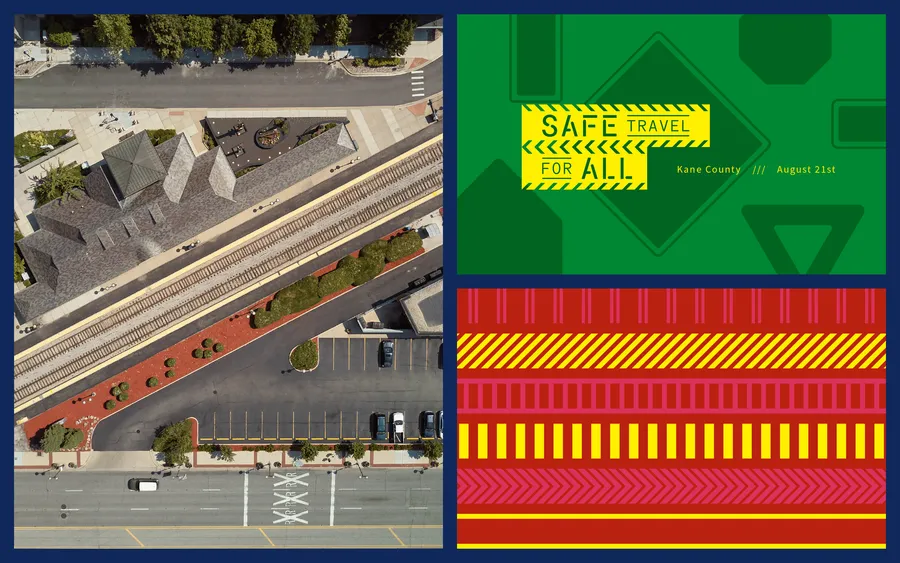
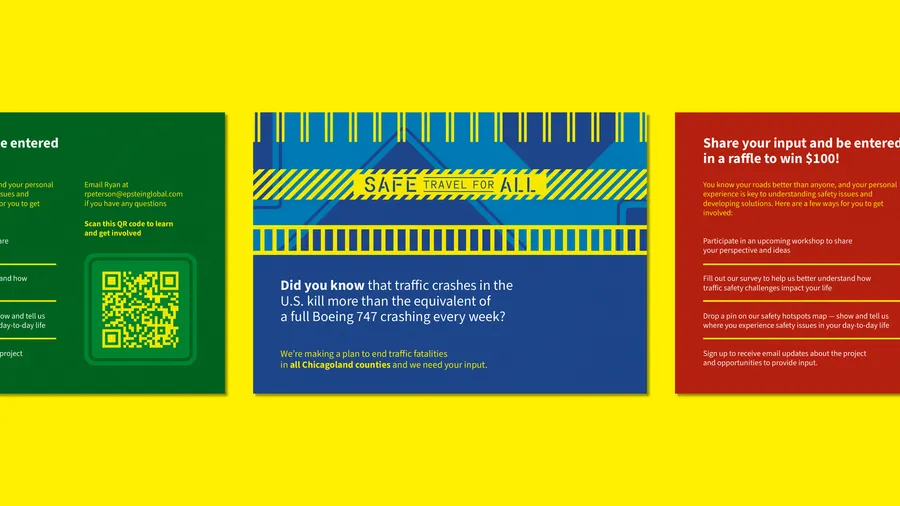
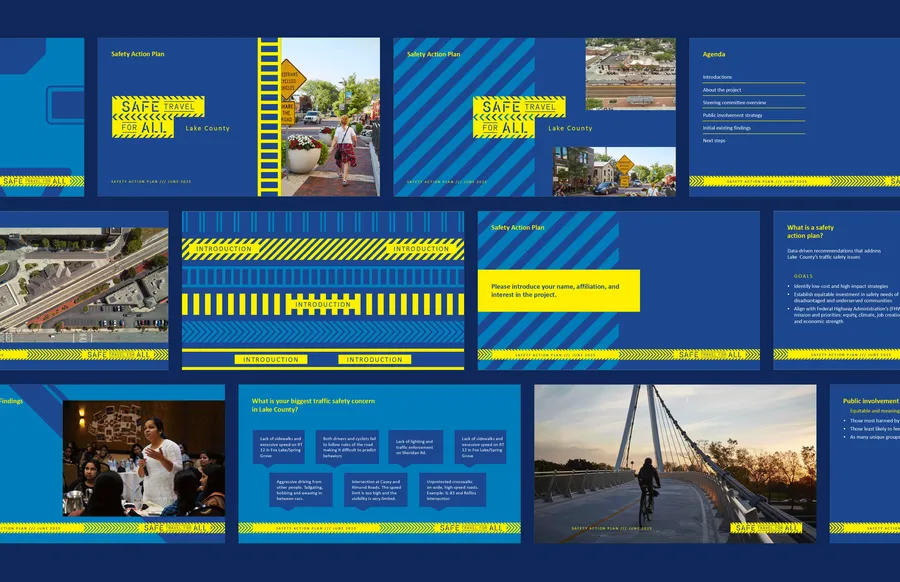
The visual system draws from signals people already read without thinking: the lane striping, directional arrows, and pavement markings codified in the Manual on Uniform Traffic Control Devices, MUTCD. These aren't aesthetic references. They're cues people process at every intersection, crosswalk, and school zone. Span borrowed that recognition and turned it toward participation. Safety stripes became messaging containers. Chevron forms carried directional energy. Sign geometries became modular frames for information. The system communicates movement and collective action before a word lands.
The wordmark holds the same logic — industrial stencil construction, engineered cuts that read as infrastructure, paired with enough graphic energy to stop someone at a farmers market or a church hall. Official enough for a state agency. Present enough for the street.

One region. Many publics.
Because the initiative spans multiple jurisdictions, the system was built to flex: county-level materials, workshops, presentations, multilingual outreach, signage, social media, posters, and public meetings. Color systems and graphic modules allowed local specificity within a unified regional framework. Consistent enough to align six counties. Flexible enough to meet communities where they are.
Everywhere people already show up
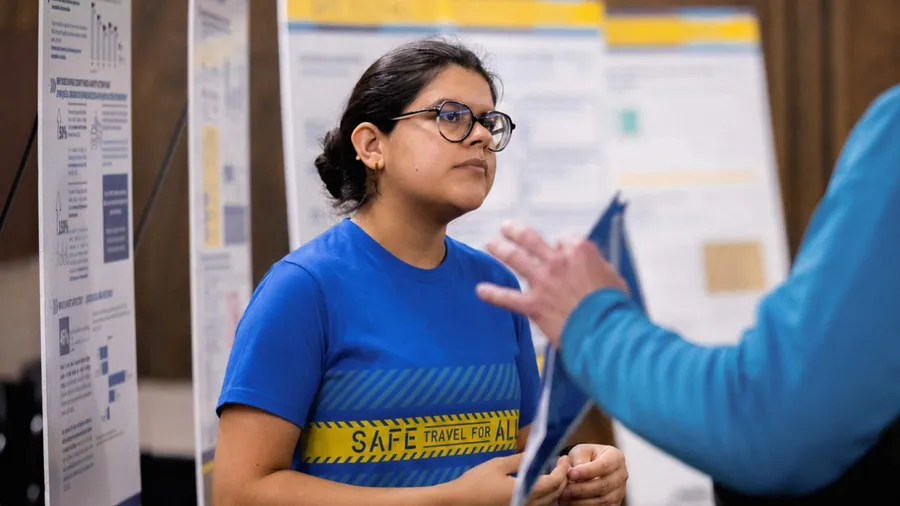
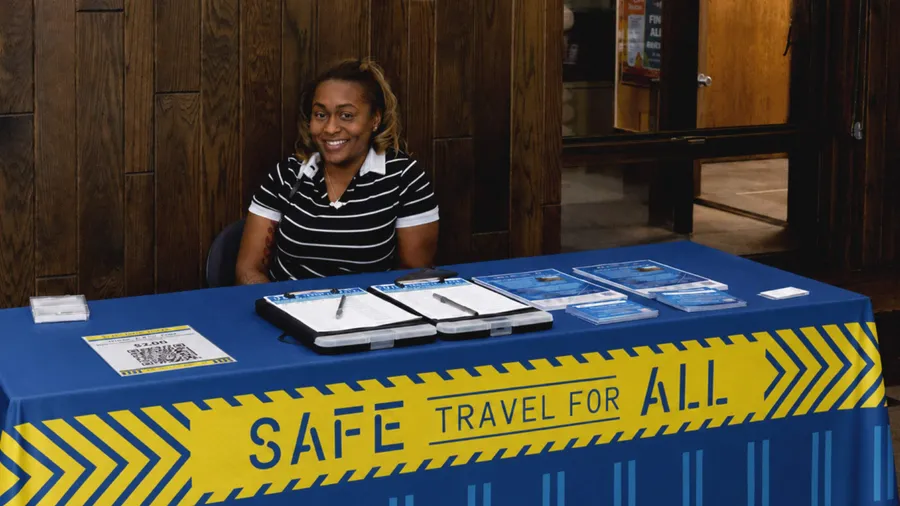
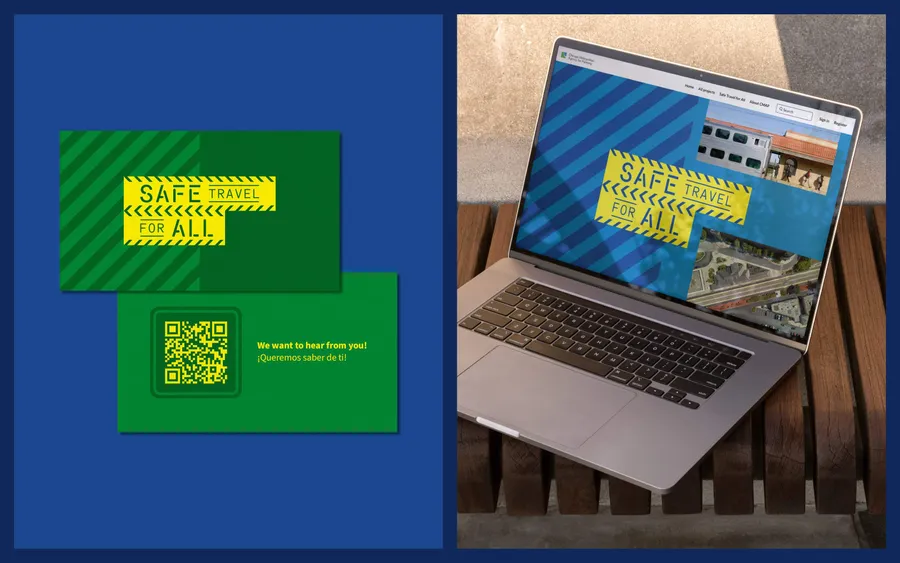
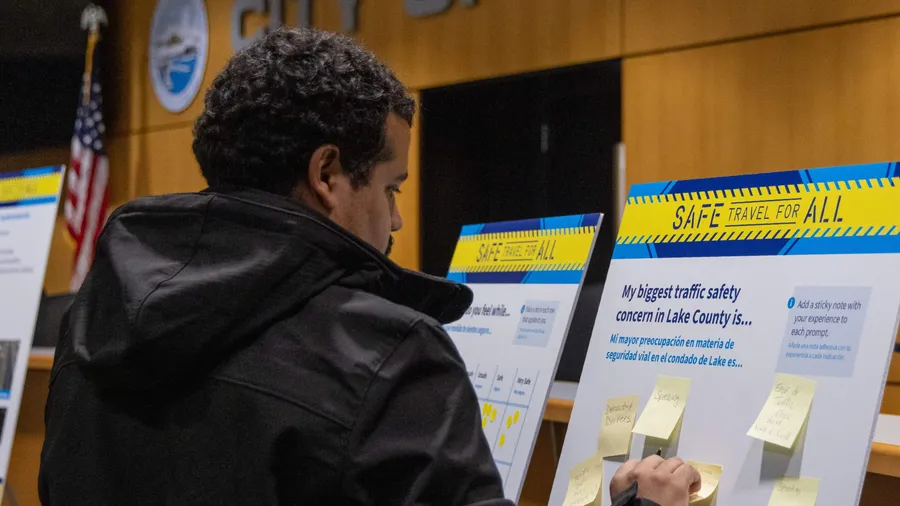
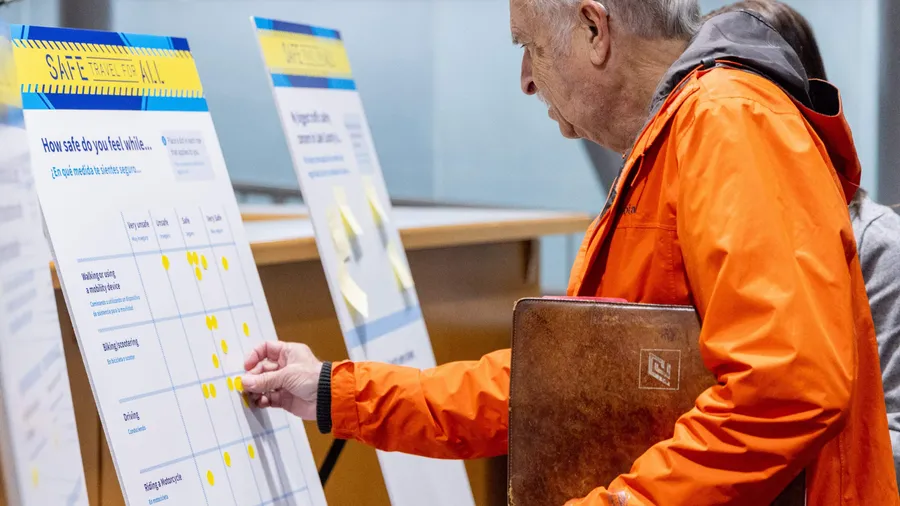
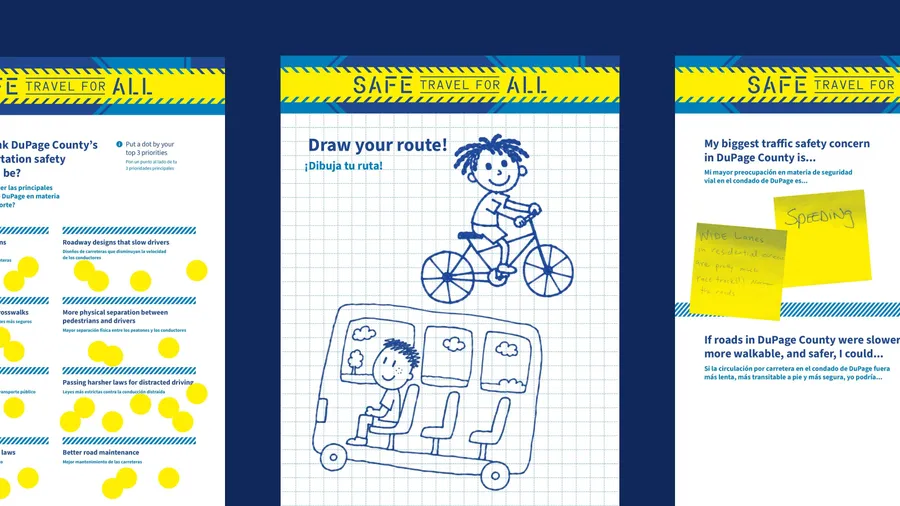
The system traveled across town halls, farmers markets, churches, neighborhood gatherings, and motorcycle festivals. Span built it out across engagement posters and boards, facilitator clothing and tablecloths, fact sheets, kids' activity sheets, and safety giveaways at every touchpoint — reflective fanny packs, zipper pulls, bike lights. Digitally: county platform skins, a data-rich presentation deck, Zoom backgrounds, and customizable social templates for community leaders to invite participation and report back on outcomes.
Design that moved planning forward
Across six counties, more than 17,000 people participated. They submitted 4,500 mapped safety concerns and 1,300 survey responses. Community-identified hotspots became the planning data. Each county completed and adopted a Safety Action Plan, later unified into a shared regional framework qualifying local governments for future federal implementation funding. Plans for implementation are set to be announced in late 2026.
Safe Travel for All demonstrates that branding can do more than communicate policy. It can help policy become public.